


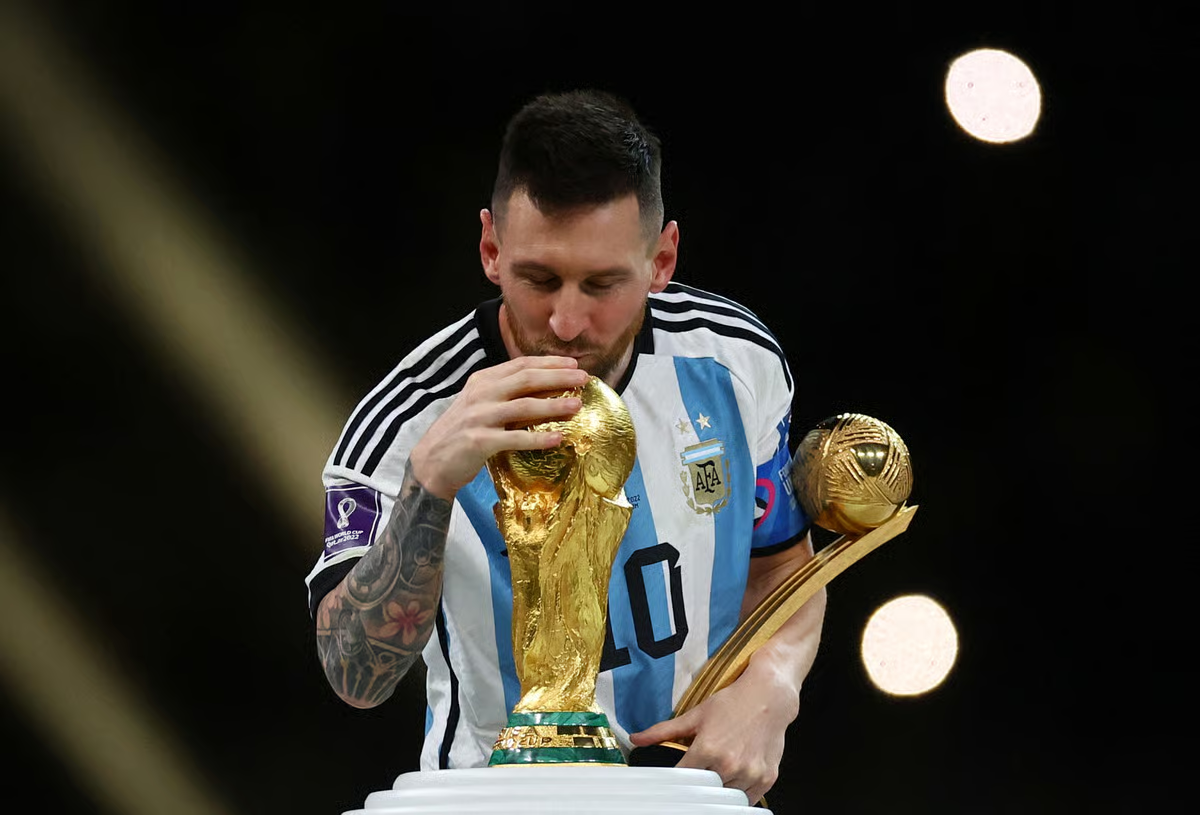

As anticipation builds for the 2026 tournament, early World Cup odds 2026 have already been released and continue to shift, with Argentina consistently sitting among the top favourites. Markets are reacting not just to squad depth and recent performances, but to one key uncertainty: will Lionel Messi be part of the team?
At nearly 38 years old, Messi is no longer just a player, he is a variable that changes expectations, tactics, and even betting markets. If he does step onto the pitch in 2026, the impact would go far beyond nostalgia. It would reshape how Argentina plays, how opponents prepare, and how the tournament unfolds.
A Different Version of Messi on the Pitch
Messi in 2026 would not be the player who constantly drops deep, dribbles through multiple defenders, and dictates every attacking move. That version peaked in earlier tournaments. The current version of Messi plays a more selective game, conserving energy and choosing when to intervene.
This shift can already be seen in his recent performances. Instead of being involved in every phase, he positions himself between defensive lines, waiting for the exact moment to receive the ball. From there, one pass or one movement can unlock an entire defence.
In practical terms, this means fewer touches but more decisive actions. Messi would no longer need to dominate games continuously. He would only need to influence the moments that define them.
How Argentina Would Adjust Tactically
Argentina’s squad heading into 2026 is significantly more balanced than in previous tournaments. In 2022, Messi was both the creative engine and one of the main goal scorers. That responsibility is now spread across multiple players.
With forwards like Julián Álvarez providing movement and finishing, and midfielders like Enzo Fernández and Alexis Mac Allister controlling possession, Messi would be freed from constant involvement. This allows Argentina to use him as a strategic weapon rather than a focal dependency.
The result is a more flexible system. Argentina could press higher, transition faster, and rely on younger players for physical intensity, while Messi operates in spaces where his intelligence becomes most valuable. This balance makes the team harder to predict and defend against.
The Influence on Big Matches
World Cups are decided by small margins. A single pass, a penalty, or a moment of composure can determine progression or elimination. This is where Messi’s presence becomes critical.
Even at an advanced age, his understanding of the game allows him to read situations faster than most players. In knockout matches, where defensive structures are tighter and opportunities are limited, this ability becomes decisive.
In tight games where both teams are cautious, Messi can identify the one gap in the defence and exploit it immediately. That kind of decision-making does not rely on speed or stamina. It relies on awareness, which remains intact.
If Argentina reaches the latter stages, Messi would likely still be involved in the key moments that define those matches.
The Psychological Effect on Opponents
Messi’s impact extends beyond what happens with the ball. His presence alone changes how teams approach Argentina. Opponents often adjust their defensive structure specifically to limit his influence.
Defenders may sit deeper to avoid being exposed, and midfielders may stay closer to him to reduce space. This creates indirect advantages for Argentina. With more attention focused on Messi, other attacking players gain more room to operate.
This dynamic means that even when Messi is not directly involved in a play, he can still shape its outcome. His reputation forces opponents to make adjustments that benefit his teammates.
Managing Minutes and Physical Demands
One of the most important factors in this scenario is how Messi would be used throughout the tournament. At 38, managing physical load becomes essential.
It is unlikely that he would play every minute of every match. Instead, Argentina would need to rotate him carefully, especially during the group stage. This approach ensures that he remains fresh for the knockout rounds, where his influence is most valuable.
Shorter appearances or controlled playing time could actually increase his effectiveness. By limiting his minutes, Argentina can maximize the impact of his contributions in crucial situations.
Potential Challenges
Despite the advantages, there are clear risks. The pace of modern international football continues to increase, with teams pressing aggressively and transitioning quickly. If Argentina fails to control possession, Messi could become isolated during defensive phases.
Additionally, injuries and recovery time become more significant factors at this stage of a career. A compact tournament schedule leaves little margin for physical setbacks.
These risks do not eliminate Messi’s value, but they highlight the importance of team structure. Argentina would need to maintain balance to ensure that his presence enhances the system rather than exposing it.