

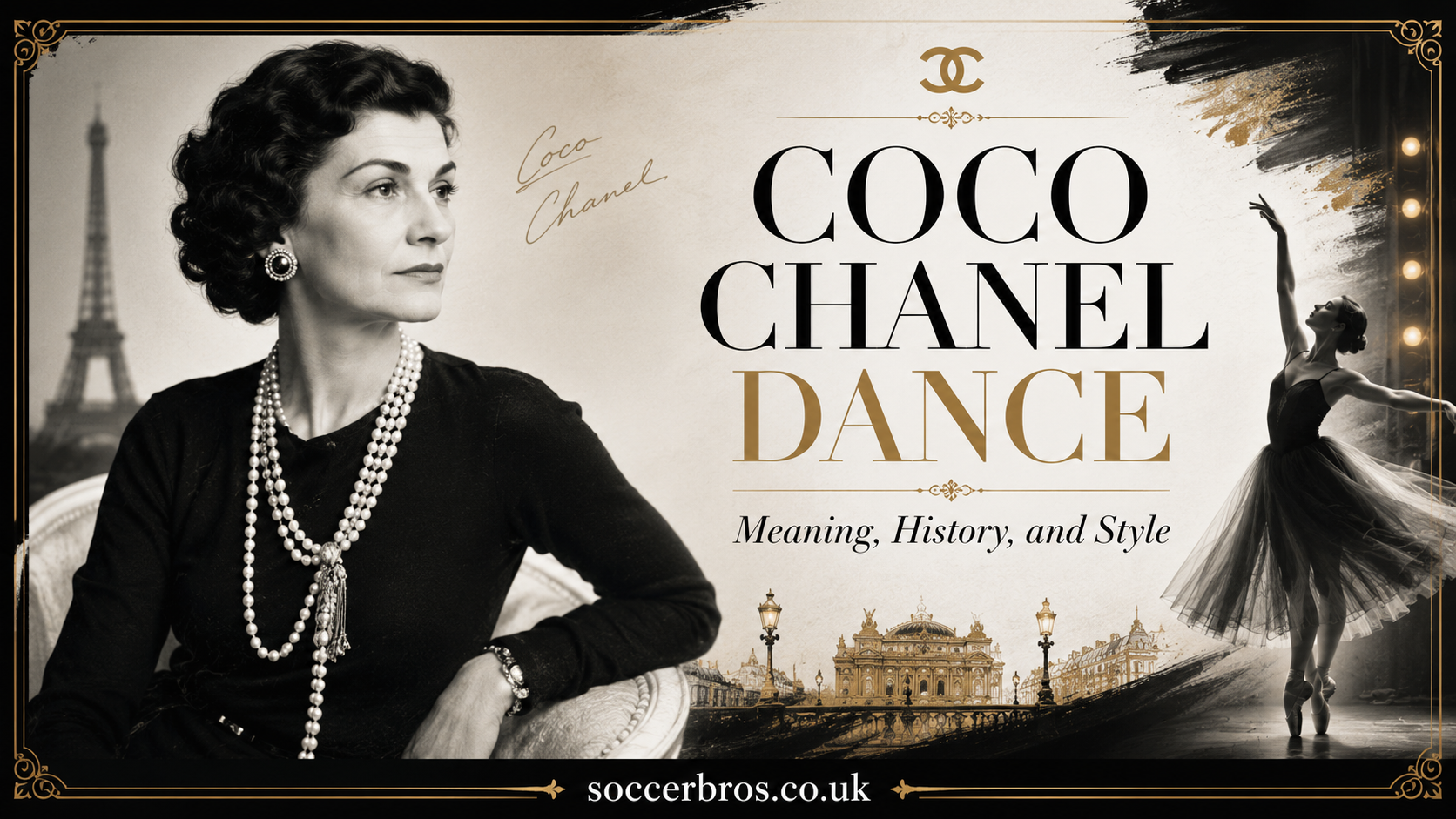

Coco Chanel Dance: Meaning, History, and Style
When Fashion Learns to Move
Fashion is not only about clothes hanging beautifully on a body. Real fashion moves. It walks, turns, breathes, bends, and follows the rhythm of everyday life. That is exactly why the idea of Coco Chanel dance feels so interesting.
At first, the phrase may sound unusual. Most people know Coco Chanel as the legendary French fashion designer who gave the world the little black dress, Chanel No. 5, jersey suits, pearls, tweed jackets, and a new way of dressing women. But dance? That part of her story is often missed.
Yet movement was central to Chanel’s style. She wanted women to feel free in their clothes. She disliked stiff corsets, heavy gowns, and fussy fashion that made the body feel trapped. Her designs carried a simple but powerful idea: elegance should not stop a woman from moving.
That is where Coco Chanel and dance meet. Her fashion philosophy was deeply connected to movement, body freedom, stage culture, ballet costume design, and the modern spirit of the 1920s. Chanel even created costumes for the 1924 Ballets Russes production Le Train Bleu, bringing her sporty, relaxed, modern style onto the dance stage. Chanel’s own fashion history notes that she created costumes for Le Train Bleu in 1924 and was connected to Sergei Diaghilev and the Ballets Russes.
So, when we talk about Coco Chanel dance, we are not only talking about a literal dance step. We are talking about a cultural idea. It is the meeting point of fashion, ballet, freedom, elegance, art, and the modern woman.
Coco Chanel Bio
| Bio Detail | Information |
|---|---|
| Full Name | Gabrielle Bonheur Chanel |
| Popular Name | Coco Chanel |
| Date of Birth | August 19, 1883 |
| Age | Died at age 87 on January 10, 1971 |
| Profession | Fashion designer, businesswoman, milliner, style icon |
| Nationality | French |
| Birthplace | Saumur, France |
| Net Worth Approx. | Not reliably documented in modern terms; her legacy is tied to the global Chanel fashion house |
| Notable Works / Achievements | Chanel No. 5, little black dress, Chanel suit, jersey fashion, tweed jacket, modern women’s fashion, costumes for Le Train Bleu |
Coco Chanel was born Gabrielle Bonheur Chanel on August 19, 1883, in Saumur, France, and died on January 10, 1971, in Paris. Britannica describes her as a French fashion designer who ruled Parisian haute couture for almost six decades and helped women move away from uncomfortable early 20th-century clothing such as corsets and petticoats.
What Does Coco Chanel Dance Mean?
The phrase Coco Chanel dance can be understood in three main ways.
First, it refers to Chanel’s real connection with ballet and stage costume. She collaborated with the world of dance, especially through the Ballets Russes. Second, it refers to modern ballets inspired by her life, including Coco Chanel: The Life of a Fashion Icon. Third, it works as a symbol of her design philosophy: fashion that allows movement, freedom, and confidence.
In other words, Coco Chanel dance is not just one performance. It is a stylish idea. It is about clothing that moves with the body instead of fighting against it.
A Simple Meaning
At its simplest, Coco Chanel dance means:
- Fashion designed for movement
- Ballet costumes shaped by modern style
- The link between Chanel and stage art
- The way elegance can feel free, not stiff
- A fashion legacy that still inspires choreography today
That is why the topic works so well for fashion lovers, dance fans, history readers, and anyone interested in art.
Coco Chanel and the Freedom of Movement
The heart of Coco Chanel style was freedom. She changed women’s fashion because she understood that clothes should serve the person wearing them.
Before Chanel became famous, fashionable women often wore tight corsets, layered skirts, and complicated garments. These clothes looked formal, but they were not always comfortable. They shaped the body by force.
Coco Chanel offered something different. She made clothes feel easier. She used softer fabrics, cleaner lines, relaxed shapes, and practical details. Her designs allowed women to walk, work, travel, socialize, and live with more comfort.
That is why dance is such a natural metaphor for her work. A dancer needs clothing that supports motion. Chanel wanted ordinary women to feel that same ease in daily life.
Why Movement Mattered to Chanel
Movement mattered because Chanel was designing for a new kind of woman. The modern woman of the early 20th century was stepping into public life more boldly. She wanted to work, drive, travel, play sports, attend parties, and move through the world with independence.
Coco Chanel understood that style had to change with her.
Her clothes often suggested:
- Ease
- Confidence
- Practicality
- Youthful energy
- Clean elegance
- Body freedom
- Modern femininity
That is the quiet connection between Coco Chanel and dance. Both are about the body expressing itself.
Coco Chanel and Ballets Russes
One of the strongest historical links between Coco Chanel and dance came through the Ballets Russes. This famous ballet company, led by Sergei Diaghilev, brought together choreographers, composers, artists, and designers in a way that transformed modern performance.
The Ballets Russes was not ordinary ballet. It was bold, artistic, colorful, and experimental. It worked with major creative figures such as Igor Stravinsky, Pablo Picasso, Jean Cocteau, and others. Chanel moved in this world of artists and innovators.
Her involvement with dance was not random. She was part of a creative Paris where fashion, painting, music, theatre, and ballet often crossed paths.
Chanel and Sergei Diaghilev
Coco Chanel became connected to Sergei Diaghilev, the founder of the Ballets Russes. Chanel’s fashion house says she became friends with Diaghilev in the 1920s and later became his patron.
That relationship mattered because Diaghilev’s world was full of creative risk. He believed ballet could be modern, daring, and visually powerful. Chanel believed women’s fashion could be modern, simple, and free. Their ideas naturally belonged in the same artistic conversation.
Why Ballets Russes Was Important
The Ballets Russes helped reshape ballet in the 20th century. It mixed music, costume, set design, and movement in fresh ways. It did not treat costume as decoration only. Costume became part of the performance.
That was perfect for Coco Chanel. Her clothes were never just fabric. They carried attitude, social meaning, and modern identity.
Coco Chanel and Le Train Bleu
The most famous example of Coco Chanel dance history is Le Train Bleu. This one-act ballet premiered in 1924 and was created for the Ballets Russes. It had choreography by Bronislava Nijinska, music by Darius Milhaud, and a scenario by Jean Cocteau. Chanel designed the costumes.
Le Train Bleu was set around the fashionable French Riviera and had a sporty, playful mood. It included swimmers, tennis players, and other leisure figures. Instead of dressing dancers in traditional fantasy costumes, Chanel dressed them in modern sportswear.
That was a bold move. It brought real modern fashion onto the ballet stage.
Why Le Train Bleu Was Different
At the time, ballet costumes were often romantic, ornate, or theatrical in a traditional sense. But Coco Chanel brought something new: casual elegance.
Her costumes reflected beach culture, sport, youth, and leisure. The ballet itself had a Riviera atmosphere, and Chanel’s designs matched that world beautifully. The result was a stage picture that looked fresh, modern, and fashionable.
The ballet’s theme involved French Riviera leisure culture, and historical summaries describe Chanel’s costumes as sporty and modern, with the wider production also connected to Jean Cocteau and Picasso’s stage curtain.
Fashion as Performance
In Le Train Bleu, Coco Chanel showed that fashion could perform. The clothes were not just worn. They helped tell the story.
This matters because dance costume has to work differently from everyday fashion. It must look good, but it must also move. It must support the performer’s body, not restrict it. Chanel’s design philosophy made her especially suited to that challenge.
Coco Chanel Dance and Modern Style
The modern meaning of Coco Chanel dance goes beyond one ballet. It describes the way Chanel’s fashion language still feels alive in movement.
Think about the Chanel suit. It is polished but not frozen. Think about jersey fabric. It falls softly. Think about the little black dress. It allows elegance without excessive decoration. Think about ballet-inspired lines, soft shoes, clean silhouettes, and clothes that follow the body.
This is why Coco Chanel remains so relevant to dance and fashion today. Her style was built around controlled simplicity, which works beautifully with movement.
The Chanel Look in Motion
A classic Chanel-inspired look often includes:
| Style Element | How It Connects to Movement |
|---|---|
| Jersey fabric | Soft, flexible, and comfortable |
| Straight silhouettes | Less restriction around the body |
| Little black dress | Simple elegance with easy wear |
| Tweed suit | Structured but practical |
| Low heels or simple shoes | Easier walking and daily movement |
| Minimal decoration | Cleaner lines and less visual weight |
| Sporty details | Inspired by active modern life |
These details help explain why Coco Chanel dance is such a strong concept. Her fashion was never only about standing still for a photograph. It was made for a life in motion.
Coco Chanel and the Modern Woman
Coco Chanel understood the modern woman before many designers did. She saw that women needed clothes for real life, not just formal occasions. Her designs gave women a sense of control over their own bodies.
That was revolutionary.
Dance also carries that same spirit. A dancer owns space through movement. Chanel’s woman owned space through style. Both ideas are about confidence.
Elegance Without Restriction
The most important Chanel lesson is simple: elegance should not feel like a prison.
Before Chanel, fashionable clothing often forced women into shapes created by corsets and structure. Chanel softened that idea. She made elegance cleaner, looser, and more personal.
That is why the phrase Coco Chanel dance feels natural. Her fashion almost “danced” compared with the heavy styles that came before it.
Coco Chanel: The Life of a Fashion Icon Ballet
In recent years, the link between Coco Chanel and dance became even clearer through the ballet Coco Chanel: The Life of a Fashion Icon. This production explores Chanel’s life through dance, costume, music, and stage design.
The ballet was created by choreographer Annabelle Lopez Ochoa and has been connected with major ballet companies including Hong Kong Ballet, Atlanta Ballet, and Queensland Ballet. Hong Kong Ballet describes it as an original ballet about the complex life of the 20th century’s famous fashion designer, with music by Peter Salem, costumes and sets by Jérôme Kaplan, and artistic collaboration by Nancy Meckler.
Why Her Life Works as Ballet
Chanel’s life was dramatic enough for the stage. She rose from poverty, built a fashion empire, became close to artists and aristocrats, changed women’s clothing, faced controversy, and created a brand that outlived her by decades.
Dance can express these emotional contrasts without turning everything into simple biography. It can show ambition, loneliness, elegance, tension, reinvention, and power through movement.
Fashion History Through Dance
A ballet about Coco Chanel does something special. It turns fashion history into physical storytelling.
Instead of only reading about her life, audiences see her world move. They see fabric, bodies, light, posture, and rhythm. That makes the story feel more immediate.
Atlanta Ballet describes Coco Chanel: The Life of a Fashion Icon as a full-length narrative ballet about the complex life of Chanel, calling her one of the 20th century’s most intriguing iconoclasts and noting her impact on fashion more than a century later.
The Style Behind Coco Chanel Dance
If Coco Chanel dance had a visual style, it would be elegant, minimal, graceful, and confident. It would not be overloaded. It would not be stiff. It would have clean lines and strong attitude.
Chanel’s style was never plain in a boring way. It was simple in a powerful way.
Key Style Features
Black and White
Coco Chanel loved strong contrasts. Black and white became central to her visual world. In dance, this kind of contrast looks dramatic on stage.
Pearls
Pearls added softness and luxury. They gave a polished finish without needing heavy decoration.
Jersey
Jersey fabric helped create comfortable clothes that moved with the body. It was one of Chanel’s great design choices.
The Little Black Dress
The little black dress became a fashion symbol because it was simple, useful, and elegant. It could move from day to evening with ease.
Sporty Elegance
Chanel borrowed from sportswear, menswear, and active life. This made her designs feel more relaxed and modern.
Coco Chanel, Dance, and the 1920s
The 1920s were full of movement. Jazz music, social dancing, short hair, looser dresses, and modern nightlife all changed how people presented themselves. Women were stepping away from older restrictions and embracing a more active public identity.
Coco Chanel fit perfectly into that world.
Her clothes matched the energy of the decade. They were modern, light, confident, and ready for movement. The flapper era, jazz culture, and new dance styles all helped shift fashion toward freedom.
Fashion and Social Dancing
Social dances of the 1920s needed clothes that moved. Women could not dance freely in heavy, restrictive garments. Shorter skirts, softer fabrics, and looser lines made movement easier.
Chanel’s influence worked alongside this cultural shift. She did not create the entire era alone, but she gave it a fashion language that still feels iconic.
Why Coco Chanel Dance Still Inspires Today
The connection between Coco Chanel and dance still inspires designers, choreographers, stylists, and fashion historians. Her work reminds us that clothing should feel alive.
Even today, Chanel-inspired fashion appears in ballet, runway shows, editorial photography, costume design, and stage productions. The reason is simple: Chanel’s style has rhythm.
A Lasting Creative Bridge
The bridge between fashion and dance remains strong because both art forms care about:
- Line
- Shape
- Balance
- Mood
- Texture
- Timing
- Gesture
- Personality
- Expression
- Movement
Coco Chanel understood these ideas instinctively. That is why her designs could move from salon to stage without losing their power.
The Cultural Legacy of Coco Chanel Dance
The phrase Coco Chanel dance also carries cultural meaning. It reminds us that Chanel’s legacy is not limited to handbags or perfume. Her work helped change how women experienced their own bodies in public life.
That is a big statement, but it is true. Clothing affects posture. It affects confidence. It affects what people feel allowed to do.
Chanel gave women clothes that suggested independence. Dance gave that independence a visible form.
Freedom as the Main Theme
If there is one word that connects Coco Chanel and dance, it is freedom.
Freedom from corsets.
Freedom from stiff tradition.
Freedom to move.
Freedom to look elegant without suffering.
Freedom to define femininity differently.
That is the real beauty of this topic.
Coco Chanel’s Complex Legacy
A trustworthy article about Coco Chanel should also admit that her legacy is complex. She was brilliant and influential, but she was also controversial, especially because of her actions and associations during World War II.
Still, her impact on fashion remains huge. She helped reshape women’s clothing and left behind one of the most recognizable fashion houses in the world. A balanced view can recognize both her creative achievements and the difficult parts of her history.
This complexity also makes her story powerful for dance. Ballet and theatre often work best with complicated figures, not perfect ones.
How to Use Coco Chanel Dance as Inspiration
If you are a writer, designer, dancer, blogger, or content creator, the idea of Coco Chanel dance can inspire many creative directions.
For Fashion Content
You can explore how Chanel changed clothing by focusing on movement, comfort, and modern elegance.
For Dance Content
You can discuss ballet costume history, stage design, and the relationship between dancers and fashion.
For Style Guides
You can create Chanel-inspired outfit ideas based on graceful movement and timeless simplicity.
For Art History
You can connect Chanel to Ballets Russes, Jean Cocteau, Picasso, Diaghilev, and early modernism.
For Culture Articles
You can discuss how fashion and dance both helped express female freedom in the 20th century.
Common Questions About Coco Chanel Dance
What does Coco Chanel dance mean?
Coco Chanel dance refers to the connection between Chanel’s fashion, movement, ballet, stage costume design, and the modern idea of elegance in motion.
Did Coco Chanel design ballet costumes?
Yes. Coco Chanel designed costumes for the 1924 Ballets Russes production Le Train Bleu, one of her most important links to dance history.
What was Le Train Bleu?
Le Train Bleu was a 1924 one-act ballet created for the Ballets Russes. It included choreography by Bronislava Nijinska, music by Darius Milhaud, a scenario by Jean Cocteau, and costumes by Coco Chanel.
Is there a ballet about Coco Chanel?
Yes. Coco Chanel: The Life of a Fashion Icon is a full-length narrative ballet created by Annabelle Lopez Ochoa and performed by major ballet companies.
How did Coco Chanel influence movement in fashion?
Coco Chanel influenced movement by designing clothes that were less restrictive, more comfortable, and better suited to modern life.
Why is Coco Chanel important in fashion history?
Coco Chanel is important because she helped redefine women’s fashion with elegant, practical, and modern designs such as the Chanel suit, little black dress, jersey clothing, and Chanel No. 5.
Conclusion: Coco Chanel Dance Is Elegance in Motion
The idea of Coco Chanel dance is more than a stylish phrase. It is a way to understand her deeper influence. Chanel did not only change what women wore. She changed how women could move, stand, walk, work, travel, and express themselves.
Her connection to dance began with real artistic history, especially through the Ballets Russes and Le Train Bleu. It continues today through ballet productions inspired by her life and through the lasting movement-friendly elegance of her designs.
Coco Chanel understood that true style should never feel trapped. It should breathe. It should move. It should carry confidence without shouting. That is why her fashion still feels alive more than a century later.
Whether you see Coco Chanel dance as ballet history, fashion symbolism, or a metaphor for freedom, one thing is clear: Chanel’s legacy still moves.
If this article helped you understand the meaning, history, and style behind Coco Chanel dance, share it with someone who loves fashion, ballet, or timeless design.