


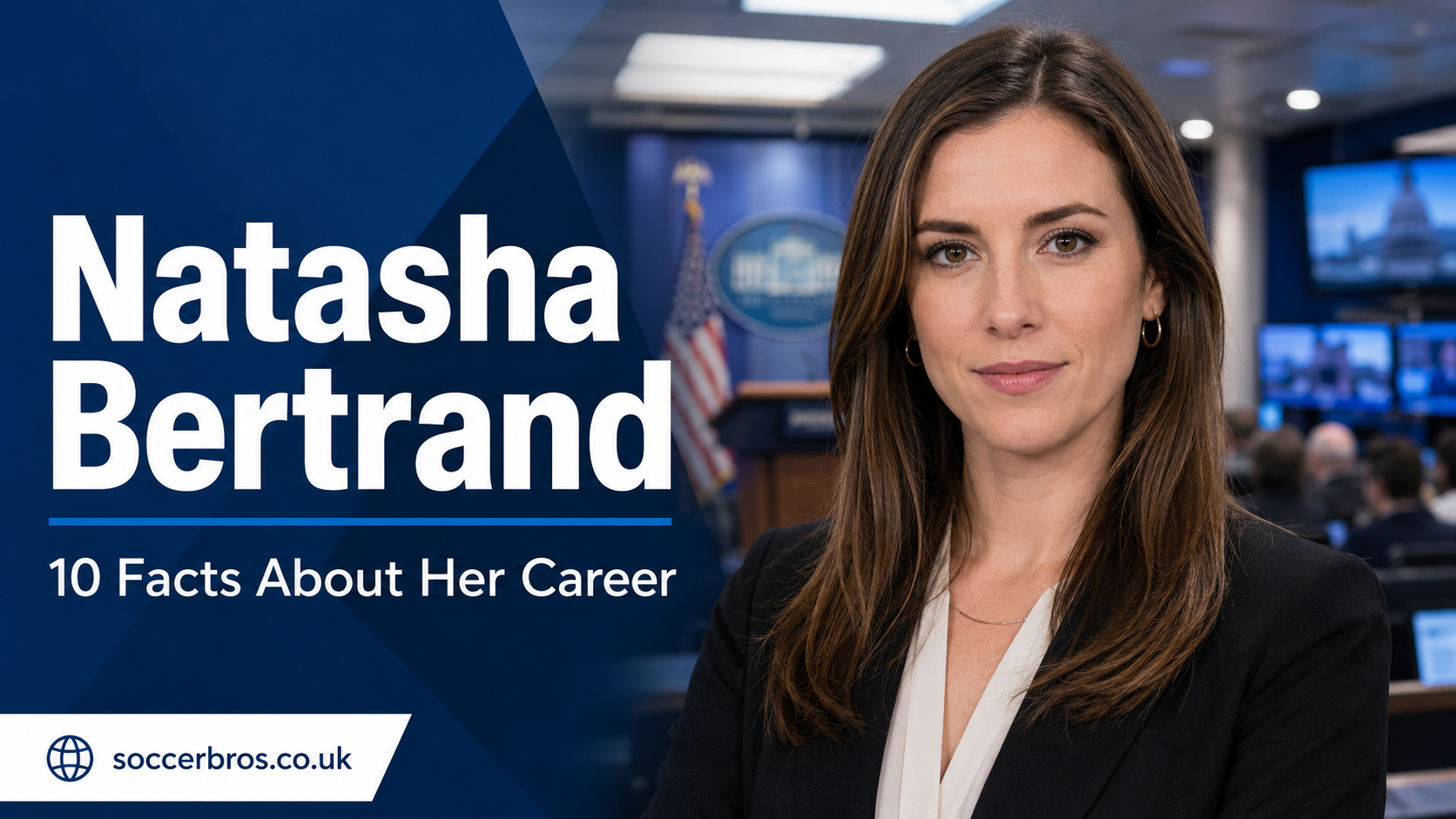

- Natasha Bertrand: 10 Facts About Her Career
- 3. Business Insider Helped Launch Her Reporting Career
- 4. She Joined The Atlantic as a Staff Writer
- 5. She Expanded Her Public Profile Through Television
- 6. Her Work at Politico Strengthened Her Reputation
Natasha Bertrand: 10 Facts About Her Career
Some reporters become familiar because they host a daily show. Others build recognition through years of careful reporting on difficult subjects. Natasha Bertrand belongs to the second group.
Her name often appears beside stories about the Pentagon, intelligence agencies, military operations, foreign policy, and national security. These are not easy topics to cover. The facts may be classified, officials may speak only on background, and the situation can change within hours. A reporter working in this field must explain what is known without pretending that every question has already been answered.
That balance has shaped the career of Natasha Bertrand. She has worked for several respected media organizations, including Business Insider, The Atlantic, Politico, and CNN. Along the way, she has covered major political investigations, international conflicts, the intelligence community, the White House, NATO, and the United States military.
Her career is also a useful example for young journalists. It shows that a reporter does not need to cover every subject to build authority. A clear area of expertise, strong sourcing, and consistent work can create a lasting professional reputation.
Here are 10 important facts about Natasha Bertrand and the journalism career that brought her into the national spotlight.
Natasha Bertrand Bio
| Profile Detail | Information |
|---|---|
| Full Name | Natasha Bertrand |
| Date of Birth | Not reliably confirmed in authoritative public profiles |
| Age | Not officially confirmed |
| Profession | Journalist and national security correspondent |
| Nationality | American |
| Net Worth (Approx.) | Not publicly disclosed or independently verified |
| Notable Works / Achievements | CNN national security reporting, Forbes 30 Under 30 recognition, Emmy-winning team coverage of Russia’s invasion of Ukraine |
The lack of a verified birth date or net worth figure is worth noting. Many biography sites publish exact numbers, yet they often provide no solid evidence. For a journalist whose work depends on accuracy, it makes sense to apply the same standard when discussing her own background.
1. Natasha Bertrand Built Her Career Around National Security
Natasha Bertrand is best known for covering national security, politics, defense policy, foreign affairs, and the intelligence community.
That focus matters because national security journalism is a highly specialized field. A reporter must understand government agencies, military language, classified information, diplomatic relations, congressional oversight, and the limits of what officials can discuss publicly.
It is not enough to repeat a statement from the Pentagon or White House. A skilled correspondent must compare official claims with intelligence assessments, expert analysis, public records, and reporting from people close to the issue.
Natasha Bertrand has spent much of her career working in this demanding space. Her reporting has touched on subjects such as:
- U.S. military operations
- Intelligence assessments
- The Pentagon
- Russia and Ukraine
- NATO policy
- Middle East conflicts
- Presidential administrations
- Congressional investigations
- Cybersecurity concerns
- Foreign interference
- Defense officials
- National security decision-making
This clear editorial focus has helped her become a familiar name among readers and viewers who follow American politics and global security.
Why Specialization Matters in Journalism
A broad reporter may understand many subjects. However, a specialist often notices details that others miss.
Years spent covering intelligence agencies and defense officials can help a journalist recognize changes in language, policy, or military posture. It also helps the reporter ask better questions. Over time, sources learn whether a journalist understands the subject and handles sensitive information with care.
That kind of trust is not created in one interview. It is built story by story.
2. She Studied Political Science and Philosophy
Before becoming a national security reporter, Natasha Bertrand studied at Vassar College. She graduated in 2014 with a dual degree in political science and philosophy.
At first glance, philosophy may seem like an unusual subject for a political journalist. In practice, the combination makes sense.
Political science helps students understand institutions, elections, public policy, international relations, and the structure of government. Philosophy develops logical thinking. It also teaches students to examine evidence, question assumptions, and build clear arguments.
Those skills are useful in almost every form of reporting. They become even more valuable when covering intelligence disputes, military action, legal questions, or conflicting statements from public officials.
How Her Education Connects to Her Work
A national security story rarely arrives in a simple form. One source may describe an event one way, while another offers a different account. Documents may be incomplete. Government officials may also disagree over what the available evidence means.
A background in political theory and careful reasoning can help a reporter separate confirmed information from interpretation. It can also improve the way a complex story is presented to the public.
Natasha Bertrand’s education did not replace newsroom experience. Still, it gave her a strong base for the subjects she would later cover.
3. Business Insider Helped Launch Her Reporting Career
One of the first major stages in Natasha Bertrand’s journalism career was her work at Business Insider.
There, she developed experience as a political correspondent and wrote about foreign policy, national security, investigations, and American politics. The digital newsroom environment also required speed. Stories had to be reported, written, updated, and explained while public interest was still growing.
That pace can be challenging. A reporter must move quickly without losing accuracy.
Business Insider gave Natasha Bertrand the chance to build a recognizable beat. Rather than remaining a general news writer, she became increasingly associated with intelligence issues, international affairs, and political investigations.
Learning to Report in a Fast News Cycle
Digital journalism often changes minute by minute. A short breaking-news report may later become a detailed analysis as new documents, statements, and interviews become available.
A successful online reporter must know when to publish a confirmed fact and when to wait for more evidence. That judgment is especially important when a story involves national security.
The work Natasha Bertrand produced during this period helped prepare her for larger assignments at national publications and television networks.
4. She Joined The Atlantic as a Staff Writer
In 2018, Natasha Bertrand joined The Atlantic as a staff writer. Her work there focused on national security, the intelligence community, and major political investigations.
Moving to The Atlantic marked an important step in her career. The publication is known for deeper reporting, analysis, essays, and long-form political coverage. That environment gave her room to explain not only what had happened, but why it mattered.
During this stage, she wrote about intelligence officials, federal investigations, foreign policy, election interference, law enforcement, and the political debates taking place in Washington.
Her role also showed that she could work across different forms of journalism. Fast digital updates require one skill set. Longer reported articles require another. Television analysis adds a third.
Natasha Bertrand gradually became comfortable in all three areas.
5. She Expanded Her Public Profile Through Television
Written journalism remained central to her career, but Natasha Bertrand also became known to television audiences through her work as a political and national security analyst.
Television reporting creates a different kind of challenge. A written article allows readers to pause, reread a paragraph, and follow links to earlier coverage. Live television does not offer that luxury.
A correspondent may have only a few minutes to explain a military operation, intelligence finding, diplomatic conflict, or political investigation. The language must be clear. The key fact must appear early. Technical terms need quick explanations.
What Makes a Strong Television Correspondent?
Good television journalism is not simply about speaking confidently. It requires preparation and restraint.
A correspondent must be able to:
- Summarize a complex event in plain English
- Explain which details are confirmed
- Identify what remains unclear
- Avoid overstating early information
- Respond to follow-up questions
- Add context without overwhelming viewers
Natasha Bertrand’s television appearances helped introduce her reporting to a wider audience. They also showed how her written expertise could translate into broadcast news.
6. Her Work at Politico Strengthened Her Reputation
Natasha Bertrand later worked as a national security correspondent for Politico. This placed her inside one of Washington’s most closely watched political newsrooms.
Politico covers the daily movement of power in the U.S. capital. Its readers include lawmakers, government workers, political strategists, journalists, researchers, and policy professionals. Reporting for that audience requires detail, speed, and strong knowledge of federal institutions.
At Politico, Natasha Bertrand continued to cover intelligence agencies, national security policy, military affairs, and major political investigations.
She also contributed to reporting on the Trump administration, Ukraine, and the decision to withhold U.S. military aid. That story became a major part of the political debate surrounding the first impeachment of President Donald Trump.
Reporting That Reached Beyond the Daily News
Some political stories disappear after a single news cycle. Others lead to hearings, official reviews, internal investigations, or congressional action.
Bertrand’s reporting during her Politico years showed how journalism can move beyond simple commentary. Detailed reporting can bring new information into public view and push government institutions to examine their own conduct.
This stage helped establish her as more than a television commentator. She was first and foremost a reporter who worked with sources, documents, editors, and reporting teams.
7. Forbes Named Her to Its 30 Under 30 List
Natasha Bertrand was included in the Forbes 30 Under 30 Media list for 2021.
The recognition highlighted her national security reporting at Politico. Forbes noted her role in reporting that President Trump was withholding military aid to Ukraine. It also pointed to her work on U.S. military stays at a Trump property, which contributed to official scrutiny.
Awards and lists do not define an entire career. Journalism is too complex for that. However, this recognition showed that her work had gained attention outside her own newsroom.
It also reflected a wider change in the media industry. Young journalists were no longer expected to spend decades working quietly before covering major national stories. Digital publications created faster paths for skilled reporters who could develop sources and break news.
Recognition Can Bring More Pressure
Public recognition is useful, but it also raises expectations.
Once a reporter becomes closely associated with major investigations, every new story receives greater attention. Supporters examine the work. Critics do the same. Mistakes, wording choices, and source decisions may become part of a wider political argument.
Natasha Bertrand’s career has unfolded during a highly divided period in American politics. As a result, her reporting has sometimes drawn strong praise and sharp criticism.
That is common for journalists covering presidents, intelligence agencies, wars, and national security. The work sits at the center of public debate.
8. She Joined CNN and Covered the White House
Natasha Bertrand joined CNN in 2021. Her early role at the network included White House reporting with a strong focus on national security.
This position brought together several parts of her earlier career. She already had experience covering politics, foreign affairs, intelligence officials, and presidential investigations. At CNN, she could use that background across television, digital reporting, live updates, and breaking-news coverage.
White House reporting can involve many subjects in a single day. A correspondent may cover military policy in the morning, sanctions in the afternoon, and an international crisis by the evening.
For Natasha Bertrand, the national security angle remained central. She reported on decisions involving the president, defense officials, intelligence leaders, foreign governments, and U.S. allies.
The Difference Between Analysis and Reporting
Viewers sometimes treat every person on television as a commentator. Yet there is an important difference.
A commentator mainly offers an opinion or interpretation. A correspondent gathers information and reports what sources, documents, and officials reveal. The correspondent may add context, but the main job is still reporting.
Natasha Bertrand’s CNN work has been built around that reporting role. Her on-air appearances usually explain what officials are saying, what the reporting team has learned, and what questions remain open.
9. CNN Promoted Her to Cover National Security
In February 2024, CNN announced that Natasha Bertrand had been promoted to correspondent covering national security.
The promotion kept her based in Washington, D.C., while expanding her role across CNN’s platforms. Her reporting has since remained closely tied to the Pentagon, defense policy, international security, military operations, and intelligence matters.
Recent CNN transcripts continue to identify her as a national security correspondent. This shows that the subject is not simply one part of her work. It is the core of her professional beat.
Why the Pentagon Beat Is So Demanding
The Pentagon is one of the most complex institutions in the U.S. government.
A correspondent covering it may need to understand:
- Military branches and command structures
- Defense budgets
- Weapons systems
- Overseas deployments
- Training operations
- Intelligence assessments
- NATO commitments
- Air and naval operations
- Civilian leadership
- Congressional oversight
- Rules for classified information
- Relations with foreign militaries
The Pentagon also communicates carefully. Officials may confirm one part of an operation while declining to discuss another. Early battle assessments can change. Casualty figures may take time to verify.
A responsible reporter must make these limits clear. Saying “we do not yet know” is often more accurate than offering a quick conclusion.
10. She Contributed to Emmy-Winning Team Coverage
Natasha Bertrand was part of the CNN team recognized with a News and Documentary Emmy for live breaking-news coverage of Russia’s invasion of Ukraine.
The award was a team achievement. That detail matters.
Major international coverage is rarely produced by one person. It may involve correspondents, camera crews, producers, editors, security teams, researchers, local journalists, translators, newsroom managers, and technical staff.
Bertrand reported from NATO during the Ukraine crisis and contributed to CNN’s wider national security coverage. Her role helped explain the U.S. and allied response to the invasion, military support for Ukraine, and decisions being made across Europe and Washington.
Teamwork Is Often Invisible to the Audience
A viewer may see one correspondent standing outside NATO headquarters or the Pentagon. Behind that short live report, however, there may be hours of calls, document checks, editorial meetings, and source conversations.
The Emmy recognition reflected the combined effort of a large reporting operation. It also marked an important career achievement for Natasha Bertrand.
Her work has continued to involve global conflict, defense strategy, the Middle East, Ukraine, NATO, military planning, and American national security policy.
What Makes Natasha Bertrand’s Career Stand Out?
Several qualities make the career of Natasha Bertrand notable.
First, she developed a clear area of expertise. National security is not a side topic for her. It has remained the central thread across several news organizations.
Second, she moved successfully between media formats. She has written digital reports, produced detailed magazine work, appeared as a television analyst, and delivered live reporting.
Third, she built experience in several respected newsrooms. Business Insider, The Atlantic, Politico, and CNN each have different editorial styles. Working across those environments requires flexibility.
Finally, her career shows the value of collaboration. Many of the biggest stories connected to her name were team efforts. That is how serious journalism often works.
Frequently Asked Questions About Natasha Bertrand
What does Natasha Bertrand do now?
Natasha Bertrand works as a CNN national security correspondent. Her reporting focuses on the Pentagon, U.S. defense policy, intelligence issues, foreign affairs, military operations, and international security.
Where did Natasha Bertrand work before CNN?
Before joining CNN, she worked for Politico, The Atlantic, and Business Insider. She also built television experience as a political and national security analyst.
What did Natasha Bertrand study?
She graduated from Vassar College in 2014 with a dual degree in political science and philosophy.
Has Natasha Bertrand won an Emmy?
She was part of the CNN team that won a News and Documentary Emmy for live breaking-news coverage of Russia’s invasion of Ukraine.
What is Natasha Bertrand’s net worth?
There is no reliable public record confirming Natasha Bertrand’s net worth. Estimates found on celebrity biography websites should be treated with caution because they are usually not supported by financial records.
How old is Natasha Bertrand?
Her exact birth date and age are not consistently documented by authoritative sources. It is safer not to present an unverified date as fact.
Lessons Young Journalists Can Learn From Her Career
The path taken by Natasha Bertrand offers several practical lessons for people interested in journalism.
Choose a subject and learn it deeply. Broad knowledge is helpful, but expertise can make a reporter more useful to readers and editors.
Learn to explain hard topics simply. A strong journalist does not use complex words merely to sound informed. The goal is to make the audience informed.
Build trust over time. Sources are more likely to speak with reporters who understand the subject and treat information carefully.
Be ready to work in different formats. Modern journalism includes written articles, television, podcasts, social media, live reporting, and digital updates.
Accept that important reporting will attract criticism. A journalist should examine fair criticism, correct real errors, and remain focused on evidence.
Most importantly, do not turn uncertainty into certainty. In national security reporting, the first account is not always the final one. Clear labels such as “preliminary,” “according to officials,” and “not independently confirmed” are signs of responsible reporting, not weakness.
Conclusion
Natasha Bertrand has built a significant career by staying close to one of journalism’s hardest beats. From Business Insider and The Atlantic to Politico and CNN, she has reported on intelligence, defense, politics, the White House, military operations, and global conflict.
Her dual background in political science and philosophy gave her a useful academic base. Her newsroom experience then helped her turn that knowledge into reporting for both readers and television viewers.
Recognition from Forbes and her contribution to Emmy-winning CNN coverage reflect the reach of her work. Still, the clearest sign of her professional identity is consistency. Natasha Bertrand has remained focused on national security even as news platforms, presidential administrations, and international crises have changed.
Her journey is a reminder that authority in journalism grows through time, subject knowledge, reliable sourcing, and the ability to explain difficult events without making them sound simpler than they really are.
What part of Natasha Bertrand’s career do you find most interesting? Share your thoughts, and pass this article along to readers who follow journalism, politics, international affairs, or national security.